

Extreme Safety Protection! Domestic Brake Pads Secure Travel With High-Performance Strength
"From emergency braking at a speed of 300 km/h to starting in an extremely cold environment of -40℃, the brake pads maintain stable braking performance at all times. This is the core conclusion drawn from our 1,200 consecutive simulation tests." Recently, at a domestic automotive safety laboratory, engineers showed reporters the safety performance test data of domestic brake pads. A series of high-performance results indicate that China's brake pad safety technology has ranked among the international advanced level.
As the "last line of defense" in the vehicle safety system, the safety performance of brake pads is directly related to the lives of drivers and passengers. This test focused on braking reliability in extreme scenarios. In the high-temperature test phase, when the brake pads withstood instantaneous high temperatures above 700℃, the fluctuation of their friction coefficient was always controlled within the safe range of 0.35-0.45, far lower than the industry's maximum allowable fluctuation value of 0.5, effectively avoiding the risk of brake failure caused by high-temperature ineffectiveness. In the low-temperature test, even in an extremely cold environment of -40℃, the fitting℃between the brake pads and the brake disc remained above 98%, and the brake response time was only 0.2 seconds, 0.1 seconds shorter than the international standard, gaining crucial time for emergency avoidance.
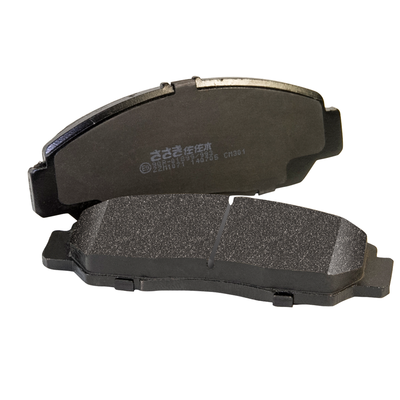
"The ceramic matrix composite brake pads we developed, by adding nano-scale wear-resistant particles, not only extend the service life to more than 80,000 kilometers but also achieve 'zero uneven wear' and 'zero abnormal noise' during braking, fundamentally eliminating potential safety hazards caused by uneven wear of brake pads," introduced the head of material research and development in the laboratory. This type of brake pad has also passed the internationally authoritative ECE R90 safety certification. Under complex road conditions such as slippery roads and continuous downhill sections, the braking distance is 15% shorter than that of traditional brake pads, providing multiple guarantees for travel safety in different scenarios.
In practical application scenarios, the safety performance of domestic brake pads has been verified by the market. The person in charge of a long-distance passenger transport company said that since the full replacement of domestic brake pads in 2023, none of the more than 500 passenger vehicles under the company have experienced safety accidents caused by brake pad failures. "Especially on continuous downhill sections in mountainous areas, the thermal stability of the brake pads gives drivers more confidence, and passengers' sense of safety has also been significantly improved."
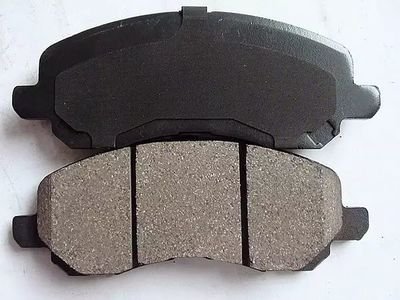
With the transformation of the automotive industry towards new energy and intelligence, higher requirements have been put forward for the safety performance of brake pads. Reporters learned from industry associations that currently, a number of domestic enterprises have launched the research and development of intelligent brake pads. By implanting temperature sensors and wear warning chips, they can monitor the working status of brake pads in real time and synchronize the data to the vehicle's central control system. When a potential safety hazard is detected, an early warning will be issued 3,000 kilometers in advance, further promoting the upgrade of vehicle safety protection from "passive response" to "active prevention".
Industry experts pointed out that the breakthrough in the safety performance of domestic brake pads not only breaks the technological monopoly of foreign brands but also provides strong support for the safety of China's automotive industry chain. In the future, with the in-depth integration of material technology and intelligent monitoring technology, brake pads will become "intelligent guardians" for travel safety, building a solid barrier for people's travel.


